
Skip to Main Content

Zero-Clinker Technology

Redefining Cement for a Carbon-Constrained World

Our innovative approach eliminates traditional carbon-intensive processes while creating superior building materials.

Industry Challenge

The Problem with Portland Cement

  • Accounts for approximately 8% of global CO₂ emissions
  • Depletes natural limestone reserves at scale
  • Clinker production requires heating to 1,450°C
  • Consumes enormous quantities of fossil fuels
  • Limited durability in harsh environments
NuGreen Approach

Our Clinker-Free Solution

  • Significant reduction in carbon emissions versus Portland cement
  • Processes at ambient temperatures — no kilns required
  • Superior resistance to chemical and environmental attack
  • Utilizes fly ash and GBFS industrial waste materials
  • Geopolymer technology creates stronger molecular bonds

Emissions Profile

Carbon Footprint Comparison

NuGreen's process eliminates the carbon-intensive clinker production phase — the single largest source of CO₂ in conventional cement manufacturing. No clinker means no limestone calcination, and no high-temperature firing.

Portland Cement (OPC)
~900 kg CO₂/ton
NuGreen Cement
Substantially lower

Specific CO₂ intensity figures are under third-party LCA verification. Full lifecycle assessment data available to engineering teams upon request.

Process

Our Carbon Reduction Methodology

  1. Waste Collection

    We source fly ash and ground blast furnace slag (GBFS) from industrial facilities that would otherwise send these materials to landfills.

  2. Geopolymer Activation

    Our proprietary alkali-activation process creates strong aluminum-silicate bonds at ambient temperatures, eliminating the need for high-heat kilns.

  3. CO₂ Avoidance

    Unlike traditional cement, our process avoids CO₂ emissions from limestone calcination and high-temperature firing by eliminating the clinker production step entirely.

Carbon Verification

Life Cycle Assessment Pending verification

Cradle-to-gate LCA following ISO 14040/14044 methodology. Documentation available to engineering teams on request.

Carbon Credit Generation Pending verification

Projects specifying NuGreen cement may qualify for carbon credits on voluntary markets.

Request LCA Documentation →

Quality Certification

ASTM C618 Compliance Pending verification

Raw materials meet or exceed ASTM C618 requirements for fly ash in concrete applications.

Performance Testing

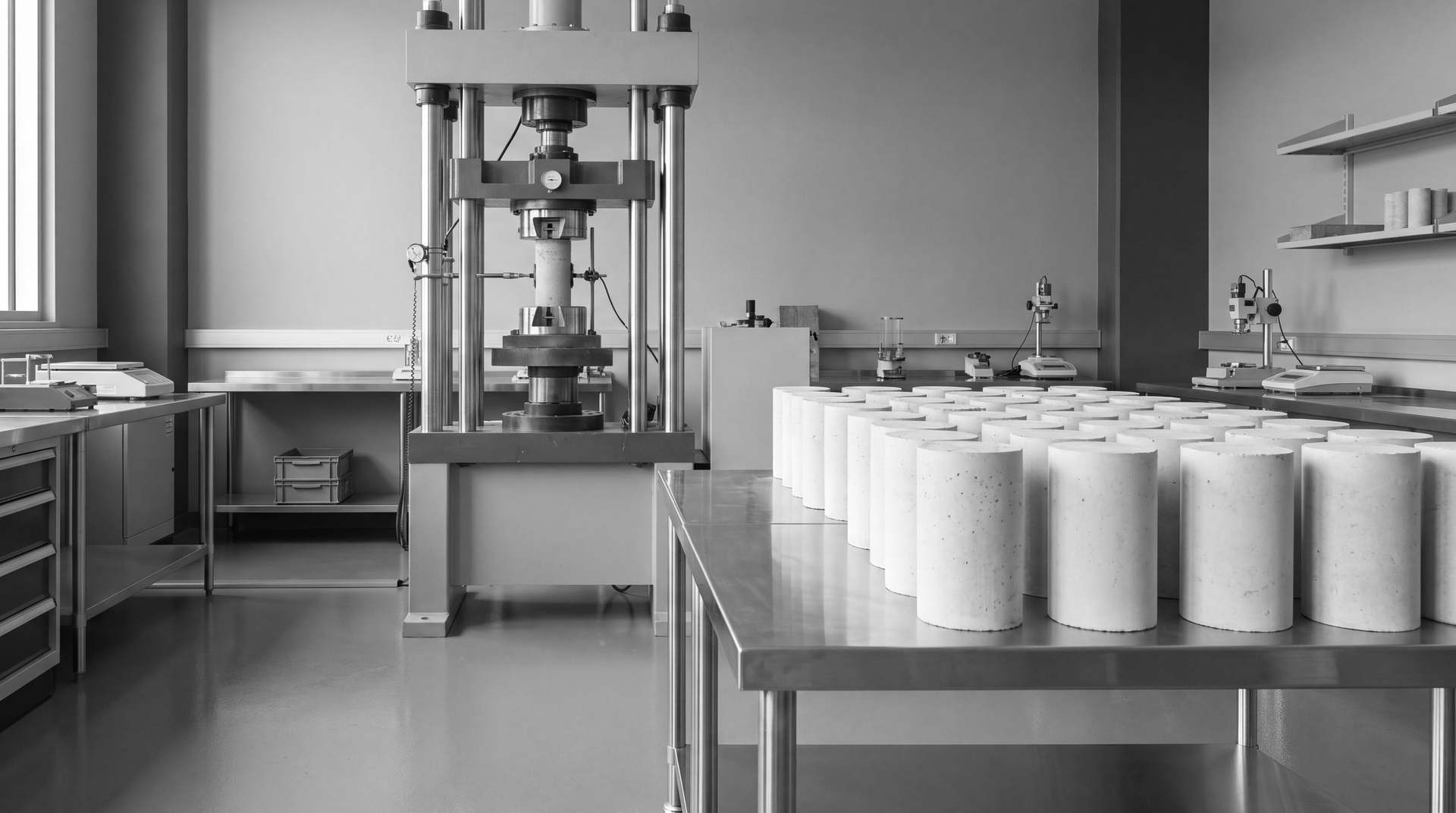
Compressive strength, durability, sulfate resistance, and chemical resistance testing using ASTM and equivalent international standards.

Environmental Product Declaration Pending verification

Transparent EPDs documenting environmental impacts across the full product lifecycle.

Request Certification Data →

Technical Data

Performance Comparison

NuGreen's zero-clinker formulation is engineered to meet or exceed Portland cement performance across compressive strength, durability, sulfate resistance, and service life. Full verification data is available to structural engineers and procurement teams on request.

Property Portland Cement NuGreen Cement Advantage
CO₂ Emissions ~900 kg CO₂/ton Pending verification Pending verification
Sulfate Resistance Moderate Pending verification Pending verification
Water Consumption ~170 L/m³ Pending verification Pending verification
Service Life 50–100 years Pending verification Pending verification
Compressive Strength (28d) 30–40 MPa Pending verification Pending verification

Performance data under third-party verification. Full comparison available to qualified engineers upon request.

Request Full Comparison Data →
NuGreen zero-clinker cement technology diagram

Circular Economy

Circular Economy Model

Our cement technology creates a closed-loop system that transforms industrial waste into valuable infrastructure while reducing carbon emissions.

  1. Industrial Waste Collection

    Fly ash and GBFS are sourced from power stations and steel mills — materials that would otherwise enter landfill.

  2. Material Processing

    Industrial by-products are processed into high-performance binders using our ambient-temperature activation technology.

  3. Infrastructure Creation

    The finished cement performs at or above Portland cement specifications across roads, bridges, and construction applications.

Specifications

Technical Specifications

Full technical specifications — including mechanical properties, durability data, compliance test reports, and contractor placement guides — are available to qualified engineers, specifiers, and procurement teams.

Mechanical

  • Compressive strength (7d, 28d)
  • Flexural strength
  • Setting time (initial & final)
  • Density & air content
  • Shrinkage

Durability

  • Freeze-thaw resistance
  • Sulfate resistance
  • Chloride permeability
  • Alkali-silica reaction (ASR)
  • Fire / thermal performance

Placement

  • Compatible: standard batch plants
  • Compatible: ready-mix trucks
  • Compatible: pump lines & formwork
  • Working time
  • Curing regime

Placement & Compatibility

Compatible With Standard mixers, pump lines, batch plants
Working Time ~30–40 minutes
Cure Time Before Load <24 hrs light load · full cure 28 days
Request Specification Sheet

Standards & Compliance

NuGreen cement is designed and tested with reference to applicable international standards. Compliance documentation and test reports are provided to engineering teams as part of the technical specification package.

  • ASTM C39
  • ASTM C157
  • ASTM C666
  • ASTM C1012
  • ASTM C1202
  • ACI Guidelines
  • AASHTO TP-60

Third-Party Testing

SGS · CTLGroup Pending verification

Ready to Implement Our Technology?

Get detailed specifications, case studies, and consultation from our technical team.